
Florida cypress trees have a way of making a landscape feel older, quieter, and more alive all at once. Their flared trunks rise from dark water. Their branches hold feathery green in spring and copper in fall. Spanish moss, still water, and a wading bird can turn one stand of trees into a whole sense of place. It is no surprise that cypress scenes stay with people long after they have left the boardwalk.
For anyone drawn to Florida wetlands, learning to recognize cypress adds another layer to the view. For anyone choosing art, it explains why a cypress print can make a room feel grounded rather than themed. This field guide looks at what makes these trees distinctive, where they belong, and how to bring their calm character into a home with care.
What makes a Florida cypress tree so recognizable?
Cypress are conifers, but they do not behave like the always-green evergreens many people expect. In fall, their soft foliage shifts from green toward copper and drops away. In spring, it returns as a fresh, feathery green. That annual change gives wetlands a subtle seasonal rhythm, even in a state better known for palms and year-round warmth.
The trunk is usually the first clue from a distance. Mature trees often have wide, buttressed bases that seem to meet the water with patience. Closer in, the bark can look fibrous, deeply ridged, or gently shaggy. Then there are the knees: those low, knobby projections that lift out of the soil around some trees. They are not decoration. They are part of how a tree has adapted to a place where water and land are constantly negotiating with each other.
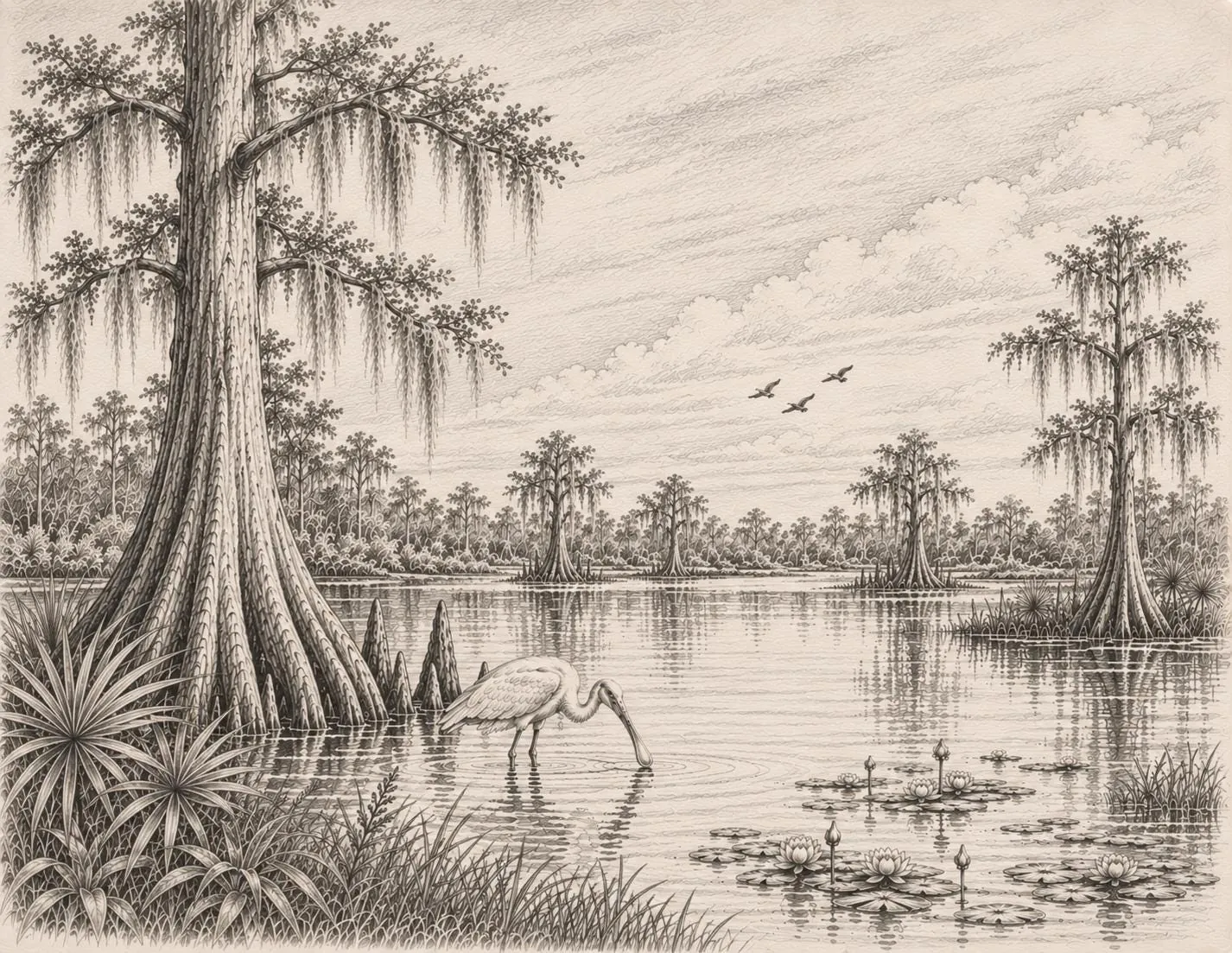
The University of Florida’s guide to Florida’s cypress trees describes cypress as a defining tree of the state’s forested wetlands. That is exactly the feeling a good cypress scene carries. It is not only a tree shape. It is water, shelter, age, and a landscape that asks you to look more slowly.
Bald cypress and pond cypress: two close relatives
Florida’s best-known native cypress are bald cypress and pond cypress. They share a family resemblance, but their differences help explain the variety you see in wetlands, along rivers, and in art. Bald cypress tends to be the larger of the two. It can develop a broad, dramatic trunk and a generous canopy, particularly in places with dependable moisture. Its foliage sits flatter along the branchlets, which can give it a softer, more layered appearance.
Pond cypress is often more compact, with foliage that sits closer to the twigs and bark that can look thicker or shaggier. It is at home near standing water and can form the distinctive cypress domes found across parts of the state. The University of Florida’s Florida cypress overview notes that both trees tolerate wet sites, while pond cypress is often the smaller choice in a landscape setting.
You do not need to identify every tree perfectly to appreciate a wetland scene. The useful thing is to notice what the view is doing. A large bald cypress can give a composition a strong center and a sense of height. A grove of pond cypress can create a softer rhythm of trunks, water, and open sky. Both can make a room feel tied to a real Florida landscape rather than a generic idea of the outdoors.
Why cypress and water belong together
Cypress trees thrive where many other trees would struggle. They are adapted to wet ground, slow water, and periods of flooding. That is why they appear along rivers, in swamps, near springs, and within the mosaic of Florida wetlands. The water gives the trunks their reflections, opens space around the roots, and creates the layered depth that makes a cypress scene so compelling.
In the Everglades, cypress can form circular cypress domes, with taller trees toward the wetter center. The Florida Museum’s guide to cypress swamps explains that bald and pond cypress are well adapted to waterlogged soils and that the trees can stand in areas covered in water longer than surrounding marshes. Its description of domes and tree islands offers a useful way to look at a print: the water is not empty space. It is part of the habitat and part of the composition.

Those watery spaces are also why cypress art can make a room feel more open. The eye follows a narrow channel or a reflection into the distance, even when the print itself is modest in size. Above a console, sofa, or reading chair, that sense of depth can bring relief to a room that feels a little too enclosed.
The meaning in the knees, moss, and reflections
A cypress scene is full of small details that reward attention. Knees turn the base of a tree into a low, sculptural shoreline. Spanish moss softens the branches overhead. Reflections repeat the trees below the waterline, making a stand of trunks feel taller and the scene feel calmer. A bird or alligator may appear as a small note of life, not as the entire subject.
These details are part of why cypress landscapes feel both grounded and a little mysterious. The Florida Department of Environmental Protection calls bald cypress one of the state’s iconic trees and notes that visitors can see old cypress stands in parks and preserves around the state. Its guide to Florida’s iconic trees highlights the famous knees and the towering trees at Fakahatchee Strand and DeLeon Springs.
When choosing cypress art, look for the details that speak to you. A pencil-style print may emphasize line, bark, and moss. A watercolor may linger on weather, reflected color, or evening light. A scene with one wading bird may feel intimate. A broader stand can feel more architectural. There is no single right version, only the one whose pace fits your home.
How to choose cypress art for a room
Begin with the wall’s job. A large wall over a sofa or bed usually needs a wider landscape, one with enough horizon and water to hold its own from across the room. A narrow entry, hallway, or space beside a bookcase often welcomes a vertical cypress print. The upright trunks add height without making the wall feel crowded.
Next, think about mood. A detailed sketch in black, warm gray, or muted green feels settled in a room with wood, linen, woven texture, traditional furniture, or cottage details. A warmer watercolor with gold or rust can add life to a neutral room. A darker, more dramatic wetland scene can create a focal point where the furniture and walls are otherwise simple.

Give the art enough visual air. Cypress scenes already have texture in the branches, roots, and water. They look strongest when nearby shelves and consoles are edited rather than crowded with every coastal object in the house. A lamp, a small ceramic vessel, a few books, and one natural material are usually enough to support the print without repeating its message too literally.
Build a small collection around one cypress print
A cypress print can be the anchor for a small, collected group. The easiest companion is a related landscape with a different view, perhaps a broader marsh scene that gives the eye more open water. A bird study can introduce a smaller focal point. A live oak, botanical, or quiet shoreline print can add another chapter without making the wall feel like a matching set.
Keep the connection in the mood and palette. Soft cream, moss, charcoal, weathered blue, warm wood, and a small amount of rust or sunset gold all sit naturally beside cypress art. Match two or three of those tones across the group, then let the individual images stay distinct. The coastal gallery wall guide has practical advice for arranging a mix of shapes and frames without losing that calm rhythm.
Before hanging, lay the prints on the floor and take a photo. The camera helps reveal when one image is too bright, a gap is too tight, or the group needs another vertical or horizontal shape. This low-pressure step is often the difference between a wall that feels accidental and one that feels like it grew there over time.
Frames that let the landscape stay quiet
Frame choice is a supporting decision, not the main event. Pale oak and warm ivory make a cypress scene feel airy and natural. Matte black gives a pencil sketch more definition, especially in rooms with dark hardware or deeper furniture. A restrained brass frame can pick up a little warmth in a sunset landscape without turning it formal.
For a pair or grid, matching frames create a calm, tailored line. For a more collected room, choose two or three finishes and repeat each one. A generous mat can help a smaller detailed drawing feel substantial, while a larger print often benefits from a simple, slimmer frame. In either case, keep the surround quieter than the landscape. The trunks, water, and moss should be the first things your eye finds.

Light matters too. Paper art is happiest away from the strongest direct sun. The Smithsonian’s care guidance for works on paper explains that light can change paper and color over time. A softly lit wall and appropriate glazing help a print remain part of everyday life while protecting it for the long term.
Florida wetlands, brought home thoughtfully
Designs By M Wright creates nature-inspired work from the quieter side of Florida: cypress trees, reflective wetlands, wading birds, native texture, and water that makes space for thought. The Old Florida Art collection is a natural place to begin if you are drawn to vintage-style cypress scenes. For warmer landscapes and changing-season color, explore the Wetlands Fall Collection.
Choose the scene you would genuinely want to live with, not just the one that seems to fit a category. A cypress print works because it carries a real sense of place. Give it the right scale, a quiet frame, and enough room to breathe, and it can make the wall feel more settled for years to come.
