
A Florida swamp can seem quiet until you give it a minute. A ripple may become a turtle surfacing for air. A pale shape at the waterline may resolve into an egret. A low call in the reeds, a dragonfly over dark water, or a cypress branch shifting overhead can reveal that the whole place is moving at its own pace.
Florida swamp animals are not one tidy list. Different wet places support different lives, and the animals you notice will change with water level, season, time of day, and how patiently you look. This guide starts with the familiar creatures, then follows the smaller connections that make a swamp feel alive. It is for looking, not collecting. The best sighting is one that leaves the animal and its habitat undisturbed.
Start with the habitat, not the animal
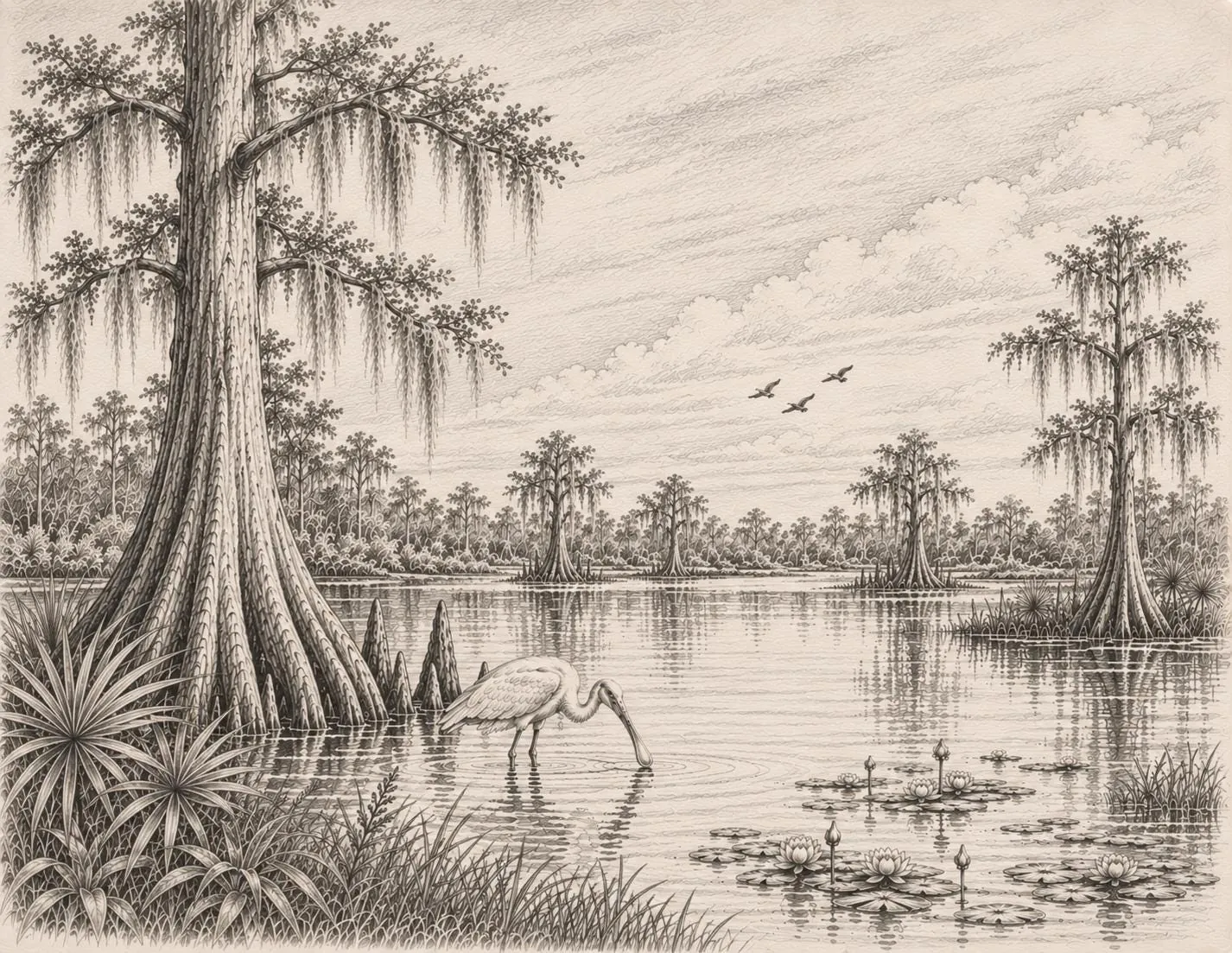
“Swamp” is often used for any wild, watery place, but Florida’s wetlands have distinct characters. A cypress swamp has trees, shade, roots, and slow water. A freshwater marsh is more open, with grasses, reeds, and shallow edges. Mangrove swamps are coastal, shaped by saltwater and tides. Each offers a different combination of cover, food, and places to rest.
The Florida Fish and Wildlife Conservation Commission’s habitat guide describes how water patterns, plants, and soil shape these communities. That is useful for a first walk because it shifts the question from “Where is the alligator?” to “What kind of place am I looking at?” A place with open shallows may hold wading birds. Fallen wood and quieter margins can suit turtles. Tree cover can offer a perch, nest site, or a sheltered path for mammals.
It also helps to separate observation from assumption. You may see a bird, a turtle, or a reptile in a wetland, but one sighting does not tell the whole story of the habitat. Let the trees, water, plants, and animal behavior work together. That slower approach makes a Florida wetland easier to understand and more rewarding to remember.
American alligators: a familiar presence, not the whole story
The American alligator is the animal most people expect to find in a Florida swamp. It belongs there, but it is only one part of a much larger community. Alligators use freshwater wetlands, lakes, rivers, marshes, and swampy edges. You may see one resting near the bank, moving quietly through open water, or showing only eyes and the top of its head.
The FWC’s alligator guidance is clear on the rule that matters most: never feed an alligator and keep your distance. Feeding teaches a wild animal to associate people with food. A boardwalk, a marked overlook, and binoculars are far better ways to watch. Keep children and pets close to you near water, and never assume a still shoreline is empty.
In the landscape, an alligator is often easier to notice after you have stopped looking for it. Search the edge where water meets vegetation. Look for a rough, dark line that does not belong to a log, then wait without approaching. The stillness is part of the animal’s way of being in the habitat, and it is part of why an alligator print can hold a wall so quietly.

Wading birds make the waterline visible
Herons, egrets, ibis, spoonbills, storks, and cranes turn a swamp’s shallow edge into a working place. Long legs let them move through water while their bills search for fish, frogs, insects, and other food. Their shapes are often the first sign that a wetland is offering more than a pretty reflection.
A great blue heron may stand so still it seems part of the scenery. An egret can appear as a bright note against dark water. Ibis probe soft ground with curved bills, and spoonbills sweep their bills through shallow water. The Audubon Florida bird guide is useful when you want to turn a careful observation into an identification, but you do not need a name to notice how a bird is using the water.
Start with three clues: the bird’s height, the shape of its bill, and what it is doing. Is it walking slowly, standing still, probing mud, or sweeping side to side? The answer tells you more than color alone. Our Florida water birds guide goes deeper into those behaviors, especially for readers learning to distinguish waders, swimmers, and divers.

Turtles, frogs, and snakes are signs of a busy edge
Much of the life in a swamp happens close to the waterline. Turtles use sunny logs and banks to warm themselves. Frogs call from reeds, grasses, and shallow pools. Snakes may move through wet ground, along branches, or near the margins where fish and amphibians are active. These animals can be easy to miss because their colors and movement fit the place so well.
The U.S. Geological Survey’s freshwater-wetlands primer describes how species such as the black swamp snake and Florida banded water snake use swamps, marshes, lake edges, and the food found there. That does not make every long shape near water a snake, nor does it make close looking a good idea. A respectful distance is the simplest rule, especially when you are unsure what you have seen.
Listen as much as you look. Frog calls can tell you that a shallow place is more active than it first appears. A turtle’s splash can look like a fish at first. Even a quiet patch of floating plants may hold insects, tadpoles, small fish, and the birds or reptiles that follow them. Swamps are full of small exchanges, not just headline animals.
Mammals often leave clues before they appear
Florida’s swamp mammals are often more private than the birds and reptiles at the water’s edge. Raccoons, river otters, deer, squirrels, and other animals may use the wetland for food, travel, cover, or a daytime resting place. In some regions, larger mammals such as black bears and the endangered Florida panther use connected wetland and forest habitat too, though they are not animals to expect on an ordinary walk.
The Florida Museum’s cypress-swamp guide lists mink, beaver, river otter, gray squirrel, raccoon, white-tailed deer, and Florida panther among the animals that use cypress habitats. That list is a reminder that a wetland does not stop at the water’s surface. The shade, dry hummocks, fallen wood, and surrounding woods can matter just as much as the channel or pond you first notice.
Look for tracks in soft ground, a ripple moving against the current, a rustle in leaf litter, or a path through grass. Then let the clue remain a clue. Do not follow it off trail or push into cover for a better look. Wildlife watching gets more interesting when the animal chooses to appear rather than being made to move.

Small life keeps a swamp working
A swamp is easier to appreciate when you stop treating insects and small aquatic animals as background noise. Dragonflies skim the water. Beetles move across the surface. Small fish shelter in vegetation. Crayfish, snails, and aquatic insects turn plant matter and tiny organisms into food for larger animals. A wading bird, frog, turtle, or fish is part of a chain that begins much lower in the water and mud.
That is why the quietest part of a wetland can still be crowded with life. A stand of cypress holds shade and perches. A clump of reeds breaks the water and gives young animals cover. A muddy margin makes room for tracks, insects, and feeding birds. As the University of Florida’s wetland-wildlife overview explains, wetlands support wildlife through the food, cover, and water they provide.
On your next walk, pick one small area and watch it for two minutes. Look at a single cypress knee, the base of a clump of grass, or the water beneath an overhanging branch. You may not see a dramatic animal, but you will begin to notice why a wetland feels so complete.
How to watch Florida swamp animals with care
Good wildlife watching is quiet, patient, and a little less ambitious than people expect. Stay on public paths, boardwalks, and overlooks. Keep a generous distance. Never feed wildlife, and do not touch, catch, or move an animal for a photograph. If you have a dog with you, follow the place’s rules and keep it controlled. If you are near water, stay out of it unless the site specifically provides a safe way to be there.
Choose early morning or late afternoon for softer light and a calmer pace, then let the day decide what it offers. A field guide, binoculars, and a camera with a long lens can add to the experience, but they are not required. You can learn a great deal by noticing whether the water is high or low, whether birds are feeding at the edge, and whether the trees are cypress, mangrove, or something else.
Bring curiosity, not a checklist. A wetland visit does not need to produce a rare animal or a perfect photograph to be worthwhile. One clear observation, such as a heron changing its path as water gets shallower or a turtle returning to the same warm log, is enough to make the next visit feel different. Returning to one public place over time is one of the best ways to see how water, weather, and wildlife belong together.
The National Park Service’s Everglades safety advice offers the same core principle: give wildlife room. Respecting distance protects you, the animal, and the next visitor’s chance to see natural behavior. It also keeps the place worthy of return.
Bring a real Florida wetland feeling home
Designs By M Wright draws from the details that make Florida swamps memorable: still water, cypress trunks, a wading bird at the edge, the shadow of an alligator, and the quiet space around all of it. If that sense of place is what you want to live with, browse the Old Florida Art collection for cypress, water, and wildlife scenes, or explore the Florida Wildlife Art collection for animal-led work.
A swamp scene works best when it feels observed rather than exaggerated. Choose the one detail you would linger over on a real walk, give it a simple frame and a little open wall around it, and let the room keep the same quiet pace.

